Your Intuition Can't be Trusted
The most important thing that we learn from Descartes is that your intuition can not be trusted. Descartes was a skeptic and he felt that all investigation should start first with doubt. Famously the one thing he could not doubt was that he himself existed. Je pense donc je suis.
It was a monumental shift in thinking. Just because you think you know X, you still should start by doubting it. Can you actually demonstrate it to be true? If you can, then that becomes truth to build on. If you can not, then simply don't believe it. Only believe in things that you can actually demonstrate. The idea was promoted a couple hundred years earlier by William of Ockham, but it was Descartes that made it famous.
Intuition is knowledge that we gather from our day to day interactions. It might be valid when reasoning about day-to-day activities, but it is often profoundly wrong about levels of existence (very large and very small) which are far removed from human scale activities.
What is Intuition?
Intuition is a body of knowledge that you use in every day actions. Much of intuition is gathered from everyday experiences: drop something and it will fall, water makes things wet, sweet things are good to eat, etc. Intuition is knowledge that we don't readily know where it comes from. When did you learn that things knocked off a table will fall to the floor? Probably much earlier than you have any distinct memories of.
Intuition about common everyday things is incredibly important and useful. Avoid touching a hot stove. Don't step too near a high cliff. Avoid interactions with large animals with sharp teeth, especially when they are hungry. Keep your keys with you when you lock the car. You can't get along without it.
People will say something "makes sense" or not based on intuition. Large building don't float up into the air, it is common sense. People don't walk on water, it is common sense. Elephants don't perform tight-rope acts, it is common sense. However a group of people drinking on New Year's eve is something that makes sense. We judge what is around us based on this intuition.
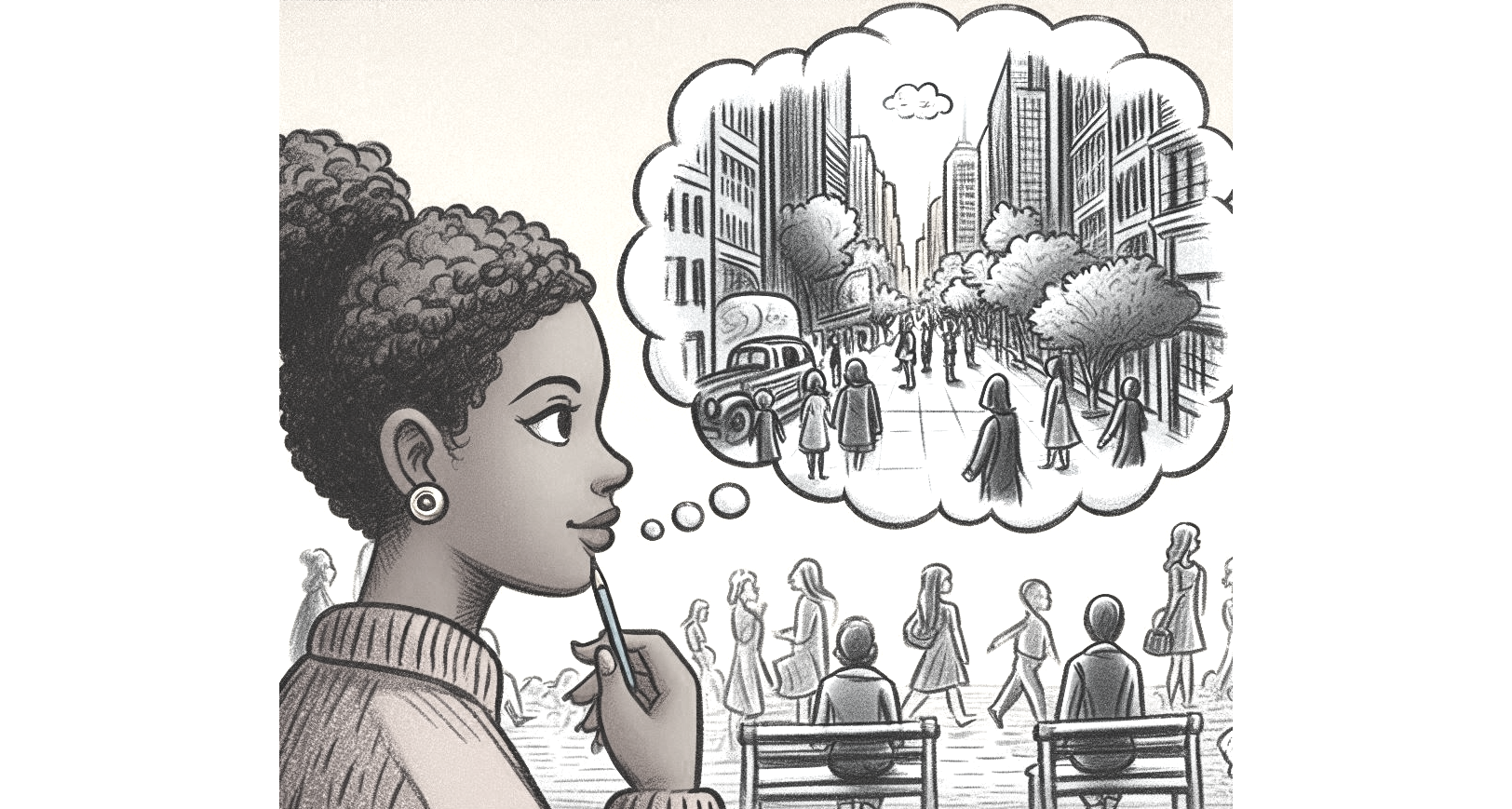
Intuition is Faulty
Intuition is common knowledge about things in our everyday experience, but it not reliable about things that are not in our experience.
scale: How molecules behave is not an everyday experience at our level or perception. How mountains form is not something you can learn from every day experience. The lifecycle of a star can not be learned by 80 years of everyday living on earth.
extremely rare: What would it be like if an asteroid would hit the earth is not something in any human's memory. Big earthquakes are rare, and even those who live through one in one place have not enough experience to say how an earth quake at a different time and place will be like.
unimportant to survival: There are occurrences around us which we ignore because they are unimportant. Where does the fly go after I shoo it out of the house? Why did the wind blow that door shut just now? How many hairs are stuck in the hairbrush?
Intuition is about Survival
Clearly the most important job for mind is to stay alive long enough to reproduce. It keeps track of things necessary for hunting and gathering food. It keeps track of dangerous things that might harm you. It makes and keeps agreements with other humans in order to band together.
The mind is superbly fit for doing this. We see, we perceive, we distinguish friend from foe, we look and find the edible plants from the others. All of these are experiences that have at our level in our time frame, and so those are things we can be expected to know about.
You don't know what you don't know
What could happen in a million years? Intuition will really have nothing to say about that, no person has ever watched a million years go by. Could a mountain be pushed up? Common sense will tell you nothing about this.
What could happen in a ball of matter 400,000 miles in diameter, like the sun? We don't have any experience with the details of what happens on the star other than sending light our direction. What would a black hole be like?
What is the likelihood that life will form on 100 billion planets? No human has personal experience with this, and so can't possibly know.
Inappropriate use of Intuition
When intuition is applied to something that no human has experience with, it is likely to be faulty. Unfortunately people do this all the time. Virtual particles appear and disappear around you all the time, but people will claim this makes no sense based on their intuition. It is just inappropriate to expect the quantum level to be the same as our level, and therefor we have no relevant experience to judge this.
People make this mistake all the time. They feel that very large scales (10^10 meters) should be just like our personal experience (about 1 meter) and should be just like the very small (10^-16 meters). At extreme scales our intuition is surprisingly wrong about how things are.
Ignoring Intuition
All good scientists know that you can not trust your intuition. Therefor you must suppress the desire to claim something makes sense or not based on common knowledge. Instead, you need to use the instruments that observe at that scale, and then carefully make conclusions based on the observed data, and not intuition.
For phenomena found outside our scale of living and timescales, we absolutely must ignore whatever intuition you might feel you have. Even within the scale of everyday life, we still need to ignore intuition, and seek an actual demonstration to show what is and is not true.
Making Sense
When debating about evolution, "making sense" to a Christian means "I have seen it happen in my day-to-day experience" as they go about their life. They also limit their experience to scales that they can experience: chemical changes happen on the molecular scale and only sensed if the result is somehow big enough; things that happen to fast to see are not part of that experience, as well as things that are too slow to see.
Christians believe that everything in the universe should be intuitive. However intuition is based on your daily experiences. We don't experience the kinds of change of evolution on a day-to-day life.
So, because they don't experience it day-to-day, they say "it doesn't make sense".
Questions and Answers
Sorry, but the most important thing we learned from Descartes is that the only thing we can know with complete certainty is that we exist - aka Descartes' famous dictum - Cogito ergo sum.
Indeed that is the most fundamental part of his thinking that set him on his course.
I don't want to quibble over a minor point, but the reason I said it that way is because Descartes is known as the father of the scientific method, that the scientific method has changed the world more than anything else that he said. The essence of science is that evidence must be demonstrated, and not just logic based on logic. A theory should be based on hard evidence, and not your intuition. I dare say, that probably was a "more important" idea, don't you think?
The false beliefs of a flat Earthers gives them a sense of superiority. Ironic.
That is right. Flat earthers are also believe their intuition instead of hard evidence. The world "looks" flat -- but having never actually seen a flat world, how would they know what one looks like?
Intuition about Creationism
Argument: Creationism is more comfortable for the human mind to conceive because evolution is not intuitive. In our personal experiences, we don't see objects that gain information on their own. The workings of life are incredibly complex. Look a since cell, it is more complex than a human city. DNA has 4 nucleotides, that collect from 20 amino acids, and build 70,000 different proteins. That is unbelievably complex! We don't in our daily life see complexity like that being assembled all by itself. Such things in our experience always designed by a human-like intelligence.
Rebuttal: The human mind is not enabled to understand molecular interactions. We don't experience molecular interactions directly, and we don't need to know how they work. The human mind is optimized for the purpose to hunt and gather food for survival. At the human scale of existence, things simply don't put themselves together like molecules do. The only things that appear organized in our world, are put together by human like intelligence. It is natural then to attempt to apply this intuition at the molecular level, but that is wrong. We think that because the living cell is elaborately complex, that it must be caused by a human-like intelligence (only waaaay more capable than humans). Saying that the complexity is unbelievable says more about what humans are able to understand, than it does about the complexity of a living cell. It is simply wrong to apply human scale intuition to quantum processes that work on completely difference scales. It is similarly wrong to apply human scale intuition to cosmology.